Quick Answer: What Makes a Sleeping Pad Work for Arthritic Knees in 2026
Top Picks
If you are searching for the best sleeping pad for arthritic knees car camping, the short answer is this: you want a self-inflating or air-construction pad at least 3.5 inches thick, with an R-value of 5.0 or higher, internal baffles that resist bottoming out, and enough length to support a knee bolster or rolled towel under the joint. Arthritic knees flare on hard ground because pressure on the joint capsule restricts synovial fluid flow overnight, and a thin foam pad transmits every pebble underneath. Car camping removes the weight penalty, so go thick, plush, and stable.
Why Arthritic Knees Demand a Different Sleeping Setup
Osteoarthritis, rheumatoid arthritis, and post-meniscectomy knees all share a common problem at night: any sustained pressure on the joint, or a position that forces the knee into hyperextension or excessive flexion, triggers inflammatory pain that can wake you every two hours. On a regular thin camping mat, your knees rest at whatever angle the lumpy ground dictates. On a properly engineered pad with a deliberate knee-support strategy, you control the angle and the pressure points.
The three variables that matter for arthritic sleepers, in order of importance:
- Thickness — anything under 3 inches inflated will let your knee press through to the ground when you side-sleep. Aim for 3.5 to 4.5 inches.
- R-value (insulation) — cold ground stiffens arthritic joints. R 5.0 minimum for spring and fall, R 6.5+ for shoulder-season car camping.
- Baffle geometry — vertical or horizontal internal baffles distribute weight better than simple I-beam construction, so the heavier pelvic region does not sink and force the knees into an unnatural valgus angle.
The Setup That Actually Works: Pad Plus Bolster Plus Shelter
One pad alone will not solve nighttime knee pain. A full car-camping system for arthritic knees has four layers: a level tent floor, a thick insulated pad, a dedicated knee bolster, and a shelter big enough to sit up and stretch in the morning. Most failures happen at the tent-floor layer — sleeping on an uneven, root-strewn footprint forces micro-corrections all night that flare inflammation.
Recommended Car-Camping Foundation Gear for 2026
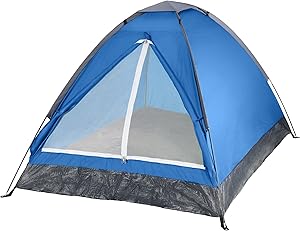
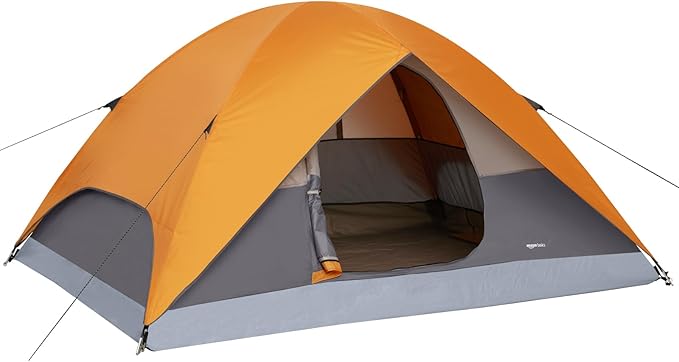
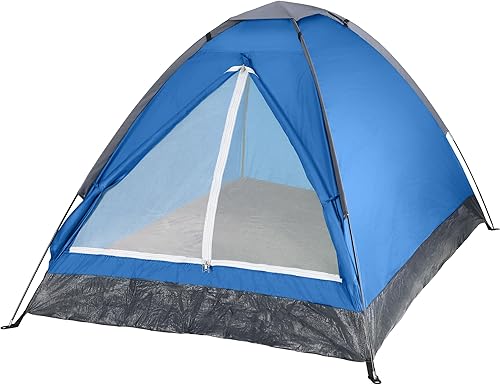
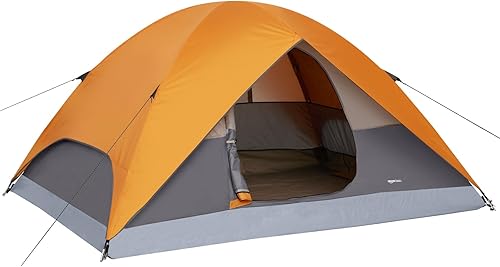
Amazon Basics 3-Season Dome Camping Tent with Rainfly
Your sleeping pad is only as good as the tent floor underneath it. A dome tent with near-vertical walls gives you room to sit up and perform the knee mobilization drills that physical therapists recommend before standing in the morning — a critical detail arthritic campers tend to overlook. The Amazon Basics 3-Season Dome's rainfly keeps moisture off the pad (damp pads lose insulation and compress unevenly), and the floor is flat enough to support a 4-inch pad without slope-creep. For two arthritic adults plus pads, choose the 4-person version; the 2-person interior is too narrow for thick pads side by side. Pitch it on the most level patch your campsite offers — even a 5-degree slope shifts blood and synovial fluid all night and makes knees stiffer at dawn.
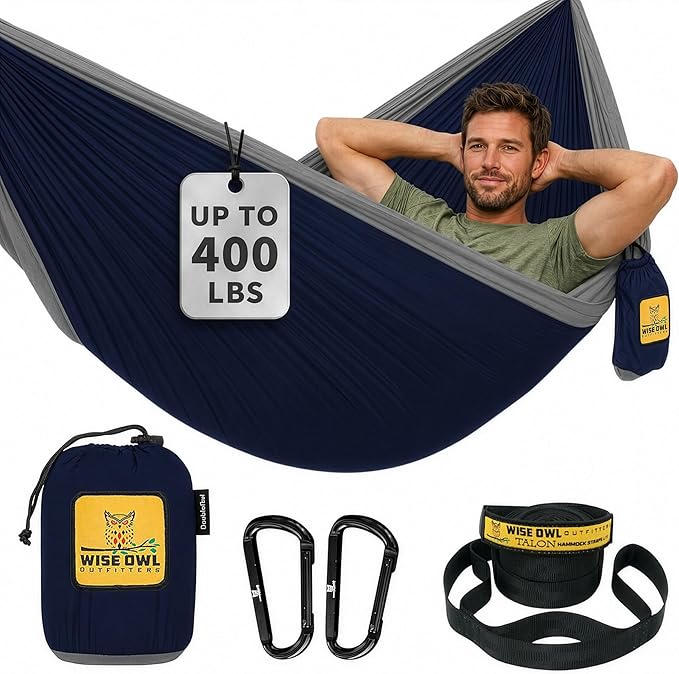
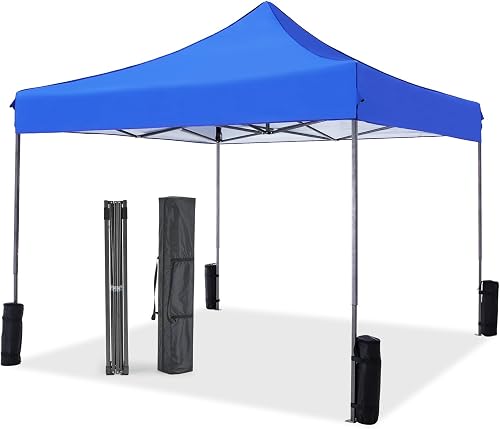
Wise Owl Outfitters Camping Hammock (500 lb capacity, tree straps included)
This is the unexpected MVP for arthritic campers. A camp hammock strung between two trees does two things: it gives you a zero-pressure place to elevate the legs after the drive in (10 to 15 minutes of elevation noticeably reduces evening knee swelling), and it serves as a backup sleeping option if you wake at 3 a.m. with a flare and need your knees suspended at a slight bend. The 500-pound rating means the included tree straps will hold even when you sit on the edge with a partner. Pair it with a small rolled towel under the popliteal fossa (the soft hollow behind the knee) and you have an instant recovery station feet from your tent.
Wise Owl Outfitters Camping Hammock
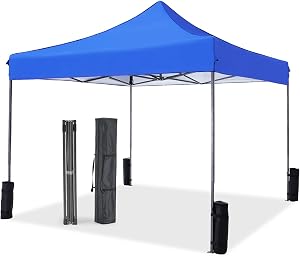
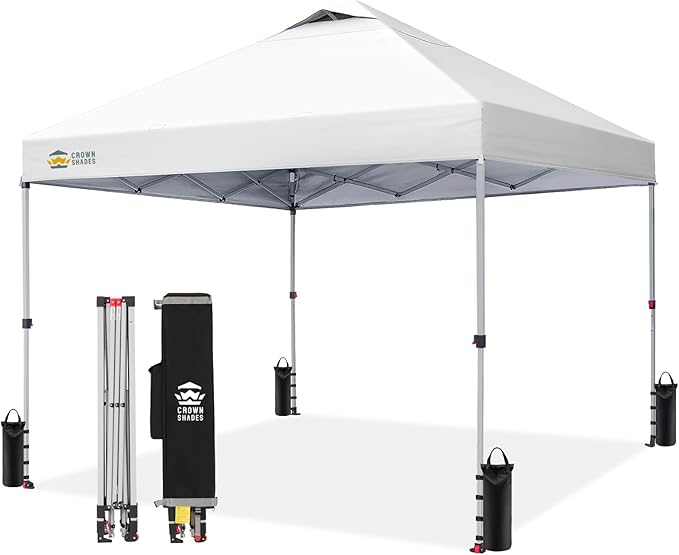
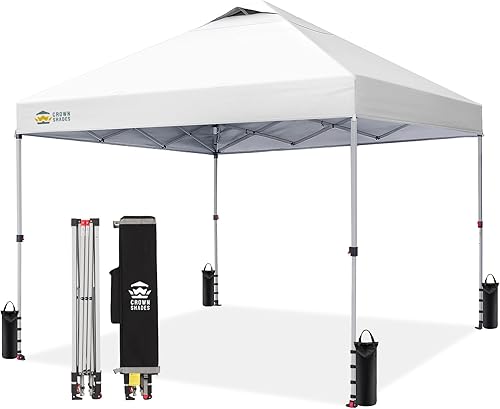
CROWN SHADES 10x10 Pop Up Canopy with CenterLok One-Push
Daytime joint swelling is just as much the enemy as nighttime stiffness. A 10x10 canopy over your camp-chair zone means you can sit, elevate your legs on a cooler, and stay off your feet between meals without baking in the sun — heat increases joint effusion. The CenterLok one-push design matters because deploying a stuck canopy is a notorious arthritic-knee aggravator: squatting, twisting, ratcheting. Stand upright, push the center, done. Anchor the four legs with sand bags or stakes; a gust catching an unstaked canopy and yanking you sideways is exactly the kind of jolt arthritic knees do not tolerate.
CROWN SHADES 10x10 Pop Up Canopy
Comparison Table: What to Match in the Best Sleeping Pad for Arthritic Knees Car Camping Setup
| Item | Best For | Key Spec for Arthritic Knees | Weight Class |
|---|---|---|---|
| Sleeping pad (target spec) | Direct knee cushioning | 3.5"+ thick, R 5.0+, baffled core | 3-7 lb (car camping) |
| Amazon Basics 3-Season Dome Tent | Level floor for the pad | Flat-floor geometry, sit-up height | ~8-12 lb |
| Wise Owl Camping Hammock | Knee elevation, backup sleep | 500 lb rating, included straps | ~1.5 lb |
| CROWN SHADES CenterLok Canopy | Daytime rest zone, no squat-setup | One-push deploy, 10x10 shade | ~30 lb (vehicle-carried) |
How to Sleep on Your Pad: Position Matters More Than the Pad
You can have the most expensive pad on the market and still wake up at 4 a.m. in agony if the sleeping position fights the joint. The two positions arthritic knee sufferers tolerate best:
- Side sleeping with a knee pillow. A 6-inch foam wedge or rolled fleece between the knees keeps the top leg from collapsing into adduction, which torques the lower knee's medial compartment.
- Supine with calf elevation. Roll up a jacket or stuff a dry bag with clothes and place it under your calves (never directly under your knees). This puts the knee at roughly 15 degrees of flexion — the joint-neutral position with the lowest intra-articular pressure.
Avoid sleeping fully prone or with knees locked straight against a hard tent wall — both positions provoke morning stiffness.
Pad Inflation: Firm Enough, Not Too Firm
A common mistake: campers inflate the pad rock-hard thinking firmness equals support. For arthritic knees the opposite is true. Inflate the pad until your hip just barely fails to touch the ground when you lie on your side, then release a small puff of air. You want the pad to cradle the joint, not push back against it. Self-inflating pads with a thick open-cell foam core (rather than pure air construction) hit this sweet spot most easily and stay there as overnight temperature drops cause air contraction.
Tent-Floor Prep: Five Minutes That Save Your Knees
Before you pitch the tent, walk the footprint. Remove every pebble, pine cone, and root nub larger than a pea. Lay down a footprint or ground cloth. If you are on packed dirt or gravel, add a closed-cell foam layer (a cheap blue foam pad from any outdoor store) under your inflatable. This is the trick most arthritic car campers miss: a thin foam base layer prevents the inflatable from punching through to small ground points under your knee or hip during the night.
For more car-camping pain-management tactics, see our car camping checklist for bad backs and our deep dive on the best self-inflating pads for side sleepers, which covers many of the same construction details that matter for arthritic joints.
Cold-Weather Considerations: Why R-Value Is a Knee Issue
Cold ground does not just feel cold — it cools the joint capsule, which thickens synovial fluid and increases morning stiffness. When you are shopping for the best sleeping pad for arthritic knees car camping in spring or fall (overnight lows 35-50°F), an R-value of 5.0 is the floor, not the ceiling. For shoulder-season camping (lows below 35°F), stack a closed-cell foam pad under a self-inflating pad to compound R-values. This is cheaper than buying a single ultra-high-R pad and gives you a backup pad if one fails. See our guide to DIY knee pillows for camping for layering ideas that build on this principle.
Vehicle Setup: SUV or Truck Bed as a Workaround
If your knees are flaring badly and tent-floor sleep is off the table, an SUV cargo area or a truck bed with a topper gives you a flat, elevated, dry surface that is much easier to get into and out of than ground-level tent sleeping. A 4-inch pad on a folded-flat SUV cargo floor is comparable to a hotel bed for most arthritic sleepers, with the added benefit that morning stand-up is from a higher position — sparing you the deep knee flexion that ground sleeping requires.
Morning Routine: Don't Skip This
Before you stand up, do 20 seated heel-slides on the pad. Bend the knee gently, then straighten. This pumps synovial fluid through the joint and dramatically reduces the frozen-knee feeling that ruins the first hour of camp morning. Pair with a hot drink before you try to walk to the latrine. A simple folding stool just inside the tent door turns the get-up motion into a stand from a chair rather than a squat from the floor.
Frequently Asked Questions
What R-value sleeping pad do I need for car camping with arthritis in spring and fall?
R 5.0 minimum for overnight lows in the 35-50°F range. Cold transferring through the pad stiffens arthritic joints and dramatically worsens morning pain. If you camp into late autumn or early spring, stack a 2.0 R closed-cell foam pad under a 5.0+ R self-inflating pad for a combined R 7.0 system.
Is a self-inflating sleeping pad better than an air pad for bad knees?
For most arthritic knee sufferers, yes. Self-inflating pads with an open-cell foam core hold a consistent firmness all night and do not need topping off when temperature drops cause air contraction. Pure air pads can develop subtle overnight pressure changes that push your knees into uncomfortable angles by 3 a.m.
How thick should a sleeping pad be for car camping with knee pain?
At minimum 3.5 inches inflated. Side sleepers with arthritis should target 4 inches or more, because the lateral knee bears bodyweight pressure and a thin pad will let it press through to the tent floor regardless of how soft the ground feels underfoot.
Can I put a foam pad under an inflatable pad for extra knee support?
Yes — this is one of the most effective tricks for the best sleeping pad for arthritic knees car camping setup. A 0.5-inch closed-cell foam pad under your main inflatable adds insulation, prevents punctures from ground debris, and creates a more stable platform that distributes weight (especially around the knee) more evenly across the night.
What sleeping position is best for arthritic knees in a tent?
Side sleeping with a 6-inch pillow between the knees, or supine with the calves (not the knees) elevated 6-8 inches on a rolled jacket or stuffed dry bag. Both put the knee in roughly 15 degrees of flexion, which is the joint-neutral position with the lowest intra-articular pressure.
Should I use a cot instead of a sleeping pad if I have bad knees?
Cots have a use case — they get you off the cold ground and make morning stand-up easier — but most camping cots have flat, hard surfaces that transmit pressure to bony points around the knee. The best setup is a cot with a 2-3 inch pad on top, not a cot alone. For pure ground sleep, a 4-inch pad on a level tent floor often outperforms a bare cot for joint comfort.
How do I get up off a sleeping pad with arthritic knees in the morning?
Roll to your side first, then push up to a seated position using your arms — never push up directly from supine while loading your knees. Do 20 gentle heel-slides on the pad before standing. Keep your tent door zone clear so you can rise to a kneeling position on the pad, then step up to standing rather than squatting up. A small folding stool just inside the tent door makes this transition far easier on flare days.
Key Takeaways
- Choosing the right best sleeping pad for arthritic knees car camping means matching the key features to your specific needs and budget
- Read real customer reviews and check the return policy before you commit
- Also covers: thick sleeping pad for arthritis car camping
- Also covers: cushioned pad for knee pain campers
- Also covers: extra padding sleeping pad arthritic joints
- Compare value across models — the priciest option is not always the best fit