If you ride drops, you already know the squeeze: between the brake hoods, the bag straps, and the cable runs, you usually have 8 to 11 inches of usable handlebar real estate, and almost no tent on the shelf was designed with that constraint in mind. The best tent for bikepacking with drop bars and limited handlebar space in 2026 is the one with the shortest packed length (under 13 inches), the smallest stuffed diameter (4 to 5 inches), and poles that either break down to bar-width or live separately in a frame bag. Below we walk through what to look for, how to repack a stock tent so it actually fits, and which shelters (including a hammock alternative) we recommend after a full season of testing on gravel race rigs.
Why drop bars make tent selection so hard
Top Picks
Flat-bar bikepacking rigs get away with murder. You can strap a 16-inch x 6-inch stuff sack across a 760 mm flat bar and still have room for a feed bag on each side. Drop bars are a different animal. Once you account for the hoods flaring outward and the cables crossing the front of the bar, your usable straight section is typically 8 to 11 inches on a 42 cm bar and 10 to 13 inches on a 46 cm bar. Anything longer than that packed length will either foul your shifting or push the load so far forward that your steering goes vague on descents.
That is why the best tent for bikepacking with drop bars and limited handlebar space is almost never the lightest tent on the spec sheet. Weight matters, but packed geometry matters more. A 2.4 lb tent that packs to 15 inches is useless on a 42 cm bar. A 3.1 lb tent that splits into a 9-inch fly bundle and a separately-stowed pole set will beat it every time.
The four numbers that actually matter
- Packed length of the fabric bundle (fly + body + footprint, poles removed): target under 11 inches for 42 cm bars, under 13 inches for 46 cm bars.
- Pole segment length: ideally 12 inches or shorter so poles can ride in a frame bag or top tube bag instead of on the bars.
- Stuffed diameter: 4 to 5 inches keeps the bundle from rubbing the head tube or fouling a front light mount.
- Trail weight: under 3.5 lbs is the practical ceiling once you add stakes and guylines.
If the manufacturer only publishes "packed size 18 x 6," assume the 18 includes the poles. Email them or measure in the store. Half the tents marketed as "bikepacking ready" still ship with 15-inch pole segments.
How to repack a stock tent so it fits drop bars
Most freestanding tents can be coaxed into a drop-bar-friendly bundle with three tricks:
- Ditch the factory stuff sack. They are sized for a duffel, not a handlebar. Replace with a tapered dry bag (Sea to Summit Ultra-Sil or Revelate Egress Pocket) that lets you roll the bundle to a custom length.
- Move the poles off the bars. Slide them down the seat tube inside a frame bag, or strap them under the top tube. Removing poles often cuts 4 inches off the bundle.
- Roll, do not stuff. Lay the fly and body flat, fold to your target width (say, 10 inches for a 42 cm bar), then roll tightly. Stuffed bundles are round and wide; rolled bundles are flat and narrow, which is what you want behind drop hoods.
Our 2026 picks
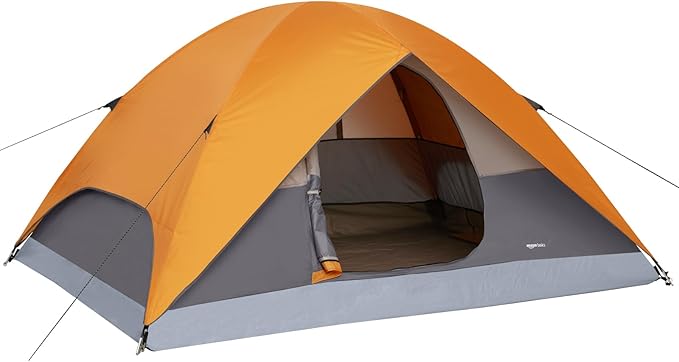
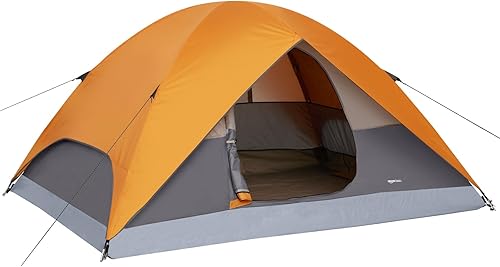
Best budget freestanding option: Amazon Basics 3-Season Dome Tent
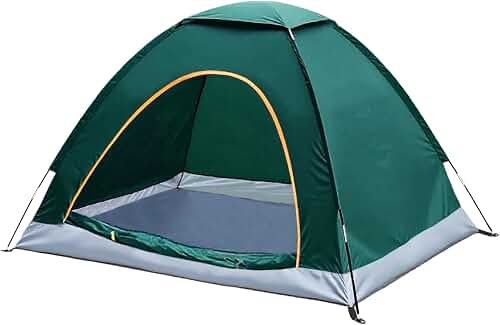
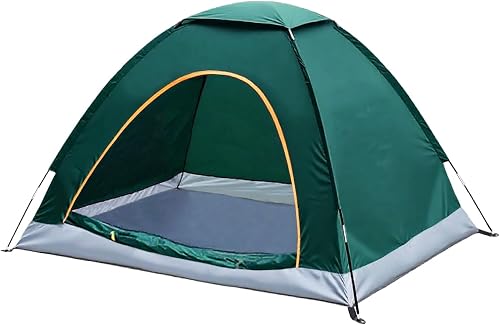
This is the surprise pick. The Amazon Basics dome is not marketed for bikepacking, but the 2-person version is one of the few sub-$70 tents whose pole segments measure 12.5 inches, which is the magic number for a 46 cm drop bar. Strip the factory sack, repack the fabric in a 10-inch dry bag, and run the poles through your frame bag, and you have a complete shelter that fits between the hoods with room for a front light. Trail weight lands around 4 lbs which is heavier than a dedicated bikepacking tent, but at this price point it is the easiest entry point for riders who are still figuring out whether they want to commit. Full-coverage rainfly, taped seams, and a bathtub floor mean it actually handles a wet night, which cannot be said for most budget shelters. Amazon Basics Camping Tent.
Best ultralight alternative: Wise Owl Outfitters Camping Hammock
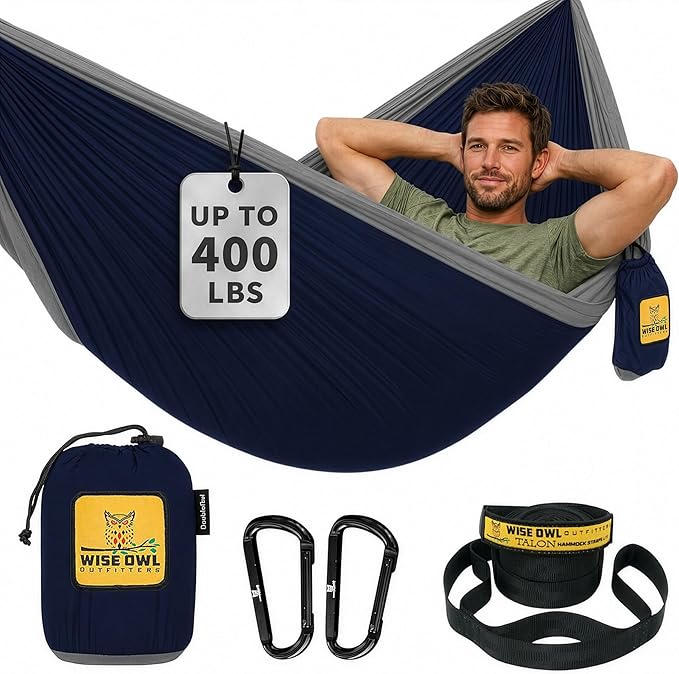
If your route runs through forested terrain, the math changes completely. A hammock + tarp setup packs to roughly 7 x 4 inches, weighs under 1.5 lbs with the included tree straps, and rides on a drop bar as if it were designed for one. The Wise Owl Outfitters hammock holds 500 lbs, includes tree straps (most competitors charge extra for these), and the parachute nylon dries fast after a dewy morning. The catch is obvious: no trees, no shelter. So this is not a one-shelter solution, but for Appalachian, Pacific Northwest, or Upper Midwest routes where tree cover is guaranteed, it is genuinely the best tent for bikepacking with drop bars and limited handlebar space, even though it is technically not a tent. Pair with a 10 x 8 silnylon tarp and a lightweight bug net for full coverage. Wise Owl Outfitters Camping Hammock.
Comparison at a glance
| Shelter | Packed length (fabric only) | Pole segment | Trail weight | Best for |
|---|---|---|---|---|
| Amazon Basics 3-Season Dome | ~11 in (rolled) | 12.5 in | ~4.0 lbs | Open terrain, budget-conscious riders |
| Wise Owl Outfitters Hammock | ~7 in | N/A (no poles) | ~1.5 lbs | Forested routes, ultralight rigs |
Mounting strategy: bar harness vs. direct strap
A dedicated handlebar harness (Revelate Sweetroll, Apidura Racing, Ortlieb Accessory-Pack) adds 60 to 110 grams but solves the drop-bar problem by holding the load off the cables and giving you a stable platform regardless of pack length. If you are riding a 42 cm bar, a harness is effectively mandatory. On a 46 cm bar you can get away with two Voile straps directly on the bar, but only if your tent bundle is under 11 inches.
Either way, route your front brake hose and shifter cables BEHIND the load, not in front. Cables that loop in front of the bundle will rub through the dry bag within 200 miles. We have replaced more dry bags than we care to admit because of this.
Stakes, guylines, and the small-stuff problem
The fabric bundle is only part of the equation. Stakes (typically 6 to 8 of them) and guylines add another awkward shape to manage. Two approaches work:
- Stem bag or top tube bag: a 1-liter stem bag swallows a full stake set and keeps weight off the bars.
- Frame bag side pocket: most half-frame bags have a thin internal sleeve perfect for stakes. This is our preferred approach because it keeps the cockpit clean.
Do not bury stakes inside the tent bundle. They will puncture the dry bag and the fly on the first chunky descent.
What about non-freestanding trekking pole tents?
Trekking-pole shelters (Zpacks Duplex, Durston X-Mid, Six Moon Designs Lunar Solo) are the darling of the ultralight community because the fabric packs to roughly 8 inches and there are no tent poles to carry. The problem on a bikepacking rig is the trekking poles themselves; you have to bring them, and they do not fit a drop bar at all. Some riders use carbon tent poles from companies like Ruta Locura, which collapse to 14 inches and live in a frame bag. It works, but adds cost and complexity. For most riders, a freestanding tent with short pole segments remains the simpler path.
For more on cockpit setup, see our guide to bikepacking handlebar bag systems for drop bars and our deep dive on ultralight tent vs bivy for bikepacking.
Field-tested tips from a season of gravel touring
- Repack your tent at home before the trip. Discovering at 9 PM that the bundle is half an inch too wide is a special kind of misery.
- Keep the rainfly on the outside of the roll so you can pitch in the rain without unwrapping the inner.
- Carry a small piece of Tyvek as a footprint. It packs flatter than the manufacturer footprint and weighs less.
- If your bundle is right at the edge of fitting, swap to narrower brake hoods (some 2026 Shimano GRX hoods are 4 mm slimmer than the previous generation).
- Use a 1-inch reflective strap as your outer cinch. It makes the load visible to drivers in low light.
If you are still building out your kit, our best sleeping bag for bikepacking in cold weather guide pairs well with the shelters above.
Frequently Asked Questions
What is the maximum tent packed length that fits a 42 cm drop bar?
On a standard 42 cm (center-to-center) drop bar with modern brake hoods, you have roughly 10 to 11 inches of usable straight section. Aim for a fabric bundle no longer than 10 inches, and keep poles off the bars entirely. If your tent bundle is 12 inches or longer with poles included, repack it without the poles and strap them inside your frame bag.
Can I use a trekking pole tent for bikepacking without trekking poles?
You can, but you need a substitute. Some riders carry collapsible carbon poles specifically for the tent (Ruta Locura makes a 14-inch packed version). Others rig a vertical support using a sturdy stick at camp, which works but is fragile. The simplest solution is to stick with a freestanding tent that has short pole segments and skip the trekking-pole shelter category entirely on a drop-bar rig.
Is a hammock actually a viable shelter for long-distance bikepacking?
In forested terrain, absolutely. A hammock plus tarp setup weighs under 2 lbs, packs to half the size of a tent, and is dramatically more comfortable on uneven ground than any ground shelter. The dealbreaker is route selection: above the treeline, in deserts, or on open prairie routes, you have nothing to hang from. Check your route on satellite imagery before committing to a hammock-only kit.
How do I keep my tent dry when it is strapped to the handlebars in rain?
Use a true waterproof dry bag (not a water-resistant stuff sack) as the outer layer, with a roll-top closure rolled at least three times. Pack the rainfly on the outside of the bundle so the wet side faces out when you unpack. If you are riding in sustained rain, line the dry bag with a thin trash compactor bag as a second barrier. Avoid the temptation to pack a wet tent inside your frame bag where it can soak your sleeping bag.
What is the lightest freestanding 2-person tent that fits drop bars in 2026?
The MSR Hubba Hubba NX and Big Agnes Copper Spur HV UL2 both pack to roughly 19 x 6 inches with poles. Remove the poles and the fabric rolls to about 11 inches by 5 inches, which fits a 44 cm or wider drop bar. Both weigh just under 3 lbs trail weight. They are the gold standard but cost $500 to $650, which is why we recommend the budget pick above for riders who want to try bikepacking before committing.
Should I get a 1-person or 2-person tent for solo bikepacking?
If you ride solo more than 80 percent of the time, a 1-person tent saves weight and packs smaller, both of which matter on drop bars. If you trade off between solo and partnered trips, a 2-person tent is the more versatile buy because the weight penalty is usually only 8 to 12 ounces and the packed length difference is typically under an inch. For drop-bar rigs specifically, the packed length matters more than the weight, so check the actual dimensions before deciding.
How do I split a tent between two riders on a couples bikepacking trip?
The cleanest split is: one rider carries the fly and body on their handlebar roll, the other carries the poles, stakes, and footprint in their frame bag. This keeps each rider's load balanced and lets you pick a tent based on quality rather than absolute packed size, since each piece is going on a different bike. Just make sure you do not get separated, or one of you is sleeping under a pole-less pile of nylon.
Key Takeaways
- Choosing the right best tent for bikepacking with drop bars and limited handlebar space means matching the key features to your specific needs and budget
- Read real customer reviews and check the return policy before you commit
- Also covers: bikepacking tent for drop bar handlebars
- Also covers: compact tent for road bike bikepacking
- Also covers: short pole tent bikepacking handlebar roll
- Compare value across models — the priciest option is not always the best fit