To pitch the REI Half Dome SL 2 on slickrock without stakes, exploit the tent's semi-freestanding pole architecture: clip the body and rainfly to the DAC poles so the dome stands on its own, then weight the four corner webbing loops with 8-12 pound rocks (deadman anchors) and tie each guy line off to boulders, scrub junipers, or rock-stuffed stuff sacks. The two foot-end corners on the Half Dome SL 2 normally need staking to tension the rainfly vestibule, so that is where your heaviest rocks or rock-bag deadmen go. That, in one paragraph, is how to pitch REI Half Dome SL 2 on slickrock without stakes — the rest of this 2026 guide breaks down the exact technique, the rope work, and the gear that makes it bombproof in Moab-style wind.
Why slickrock breaks every normal staking plan
Top Picks
Slickrock is petrified Navajo or Entrada sandstone — a single fused sheet of rock that has zero crack tolerance for an aluminum stake. You can hammer a MSR Groundhog all day and it will skip off like a flicked penny. The Half Dome SL 2 is mostly freestanding, but REI specifically designs the foot-end vestibule and the two rainfly corners to require tensioned stakes for full headroom and storm performance. Skip that step and the fly sags onto the mesh, kills airflow, and flaps loud enough to wake the dead. So the entire problem of how to pitch REI Half Dome SL 2 on slickrock without stakes reduces to one engineering question: how do you replicate 6 pounds of stake holding power without a stake?
When shopping for how to pitch rei half dome sl 2 on slickrock without stakes, it pays to compare specs, capacity, and real-world runtime before committing.
Answer: deadman anchors. A deadman is any heavy object — a rock, a rock-filled stuff sack, a log, a sand-filled dry bag — that resists the tent's pull through sheer weight and friction against the slickrock surface. Done right, deadmen outperform stakes in wind because they cannot pop out of soft ground when a 40 mph gust hits.
The 7-step slickrock pitch for the Half Dome SL 2
- Scout the slab. Pick a spot that is genuinely flat (use your phone's bubble level), free of pooling spots, and surrounded by 10-20 lb rocks within a 15-foot radius. Sweep grit off the footprint area with your hand or a bandana — grit chews up the tent floor coating.
- Lay the footprint. The REI Half Dome SL 2 footprint has corner grommets. Drop a fist-sized rock on each corner of the footprint to hold it during setup; wind will Frisbee it across the slab otherwise.
- Build the dome. Assemble the DAC NFL poles, run them through the color-coded sleeves, and clip the body. The Half Dome SL 2 is freestanding at this stage — it will stand on its own with no staking. Confirm the tent body is properly tensioned (no sag in the side walls).
- Throw the rainfly. Match the fly's color-coded buckles to the corresponding tent corners. Connect all four corner clips. At this point the dome is up but the vestibule fly is loose.
- Weight the four corners. Each tent corner has a webbing daisy-loop where a stake normally goes. Run a short loop of cord through the webbing and around a 10-15 lb rock placed flush against the corner. The rock is your stake. Pull the cord snug so the rainfly corner is tensioned outward and downward.
- Set the vestibule deadmen. The two foot-end vestibule guy points are the highest-load points on this tent in wind. Use the largest rocks you can move — 20+ lb if you can find them — or fill a stuff sack with smaller rocks and tie the guy line around the neck. Place these 3-4 feet out from the tent at the standard 45-degree angle.
- Tension the storm guy-outs. The Half Dome SL 2 has mid-panel reflective guy-out loops on the fly. In any wind above 15 mph, run paracord from these loops to boulders, juniper trunks, or additional rock-bag deadmen. This is the step most campers skip, and it is the difference between a quiet night and a flapping nightmare.
Deadman anchor knots that actually hold
Use a round turn and two half hitches to secure paracord to a rock — wrap the cord twice around the rock's narrowest waist, then finish with two half hitches on the standing line. For rock-filled stuff sacks, cinch the drawcord, fold the neck over, and tie a clove hitch around the folded neck. For trucker's-hitch tensioning between a tent guy-out and a distant boulder, use a slipped half hitch as the pulley — you get roughly 3:1 mechanical advantage to pull the fly drum-tight without overloading the seam.
Gear that makes the no-stake pitch effortless
You do not need exotic gear, but three things help enormously: 50 feet of extra 2mm reflective guy line, two empty stuff sacks you can fill with rocks on site, and a backup freestanding shelter for the night the wind tops 50 mph and your deadmen start sliding. Here are the picks I actually recommend for slickrock-heavy trips in 2026.
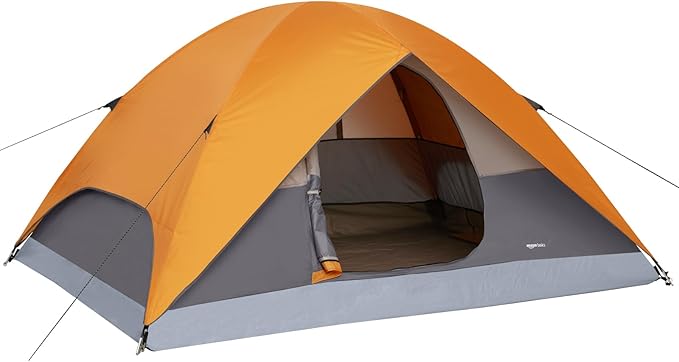
Best freestanding backup tent: Amazon Basics 3-Season Dome Camping Tent with Rainfly
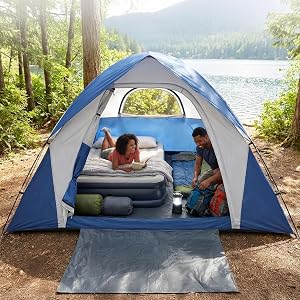
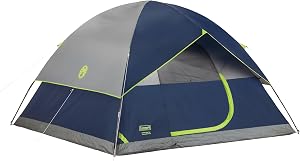
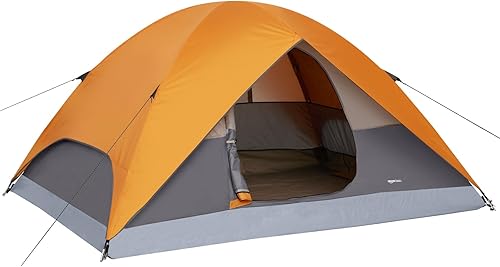
If you camp slickrock often, a fully freestanding (not semi-freestanding) backup tent is worth the trunk space. The Amazon Basics 3-Season Dome stands without a single stake — the fly attaches by clip alone — so for short fair-weather slickrock nights you can set it up, weight the corners with rocks, and call it done. It is heavier and less storm-worthy than your Half Dome SL 2, but for car-camping at Sand Flats Recreation Area or similar it is the lowest-friction shelter you can buy. Amazon Basics Camping Tent.
Best alternative shelter when slickrock pitching fails: Wise Owl Outfitters Camping Hammock
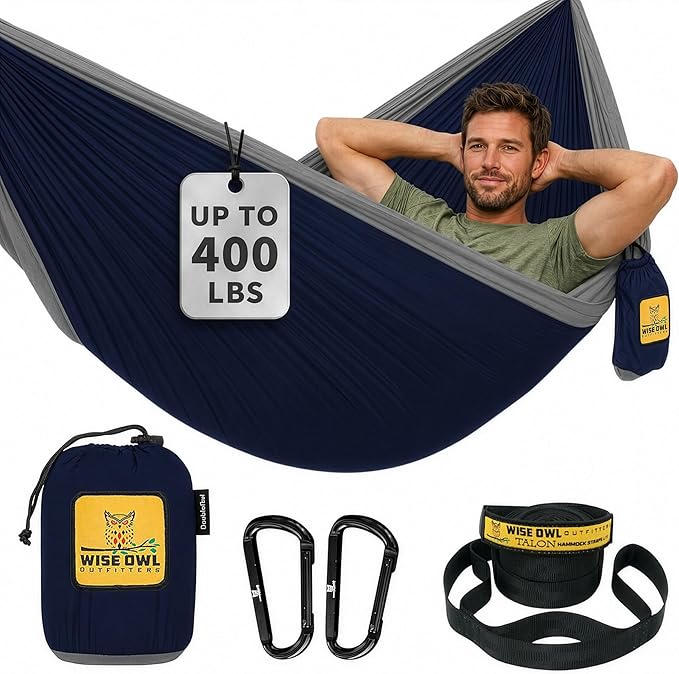
Sometimes the slab has no usable boulders and the wind is howling. The play then is to abandon ground sleeping and string a hammock between two junipers or a rock-cairn-anchored ridgeline. The Wise Owl Outfitters Camping Hammock holds 500 lbs, packs to softball size, and includes tree straps that double as makeshift guy-out extenders for your Half Dome SL 2 in a pinch. I keep one in the truck specifically as a slickrock backup. Wise Owl Outfitters Camping Hammock.
Comparison: backup shelters for slickrock camping
| Shelter | Freestanding? | Weight | Best slickrock use case | Capacity |
|---|---|---|---|---|
| REI Half Dome SL 2 (your main tent) | Semi-freestanding | ~4 lb 11 oz | Any night you can rig 6 deadmen | 2 people |
| Amazon Basics 3-Season Dome | Fully freestanding | ~7 lb | Calm-weather slickrock car camping | 2-4 people |
| Wise Owl Outfitters Hammock | N/A (suspension) | ~26 oz | No boulders, but junipers nearby | 1 person, 500 lb |
The 5 most common slickrock pitching mistakes
1. Undersized deadmen. A 3 lb rock will not hold a tent corner in a gust. The rule of thumb is 1 lb of deadman per 1 mph of expected gust at each corner. Plan for 30 mph, weight each corner with 30 lb. 2. Cord angle too steep. Your guy line should leave the tent at the same 45-degree angle as a normal stake would. Vertical pulls (rock placed directly under the guy-out) provide almost zero holding power. 3. Skipping the storm guy-outs. The Half Dome SL 2's mid-panel guy-outs are not decorative — they keep the fly off the mesh in wind. 4. Pitching too tight on a hot day. Slickrock radiates heat; nylon contracts as it cools at night. A drum-tight pitch at 2 PM becomes a deformed pitch at 2 AM. Leave 5-10% slack. 5. No groundsheet. Slickrock is abrasive. Always use the footprint or a Tyvek sheet.
Wind, weather, and when to bail
The Half Dome SL 2 is rated 3-season and can handle 30-40 mph wind on a properly staked pitch. On rock-anchored deadmen, knock 30% off that estimate — deadmen slide before they fail catastrophically, which is actually safer but means earlier evacuation. If the forecast shows sustained wind above 35 mph or any thunderstorm activity, move off the exposed slab into a sheltered side canyon. Slickrock is also the worst place to be in a lightning storm — you are the tallest thing on a giant grounding plane.
For broader desert-trip planning see our desert camping essentials checklist and our breakdown of best freestanding tents for no-stake pitching.
Pitching variations: cracks, slabs, and sand pockets
Pure slickrock with zero cracks is the hard case covered above. If your slab has hairline cracks, you can wedge MSR Carbon Core or Cyclone stakes into the cracks at an angle — they will hold surprisingly well as friction anchors. If you have sand pockets in depressions, fill stuff sacks with sand and bury them 6 inches deep as sand-deadmen — these are even stronger than rock deadmen because the sand conforms around the bag. For our full guide to camping on hard surfaces, see how to stake tents on hard ground.
Frequently Asked Questions
Can the REI Half Dome SL 2 stand fully freestanding without any stakes at all?
The tent body stands fully freestanding on its DAC poles, yes. But the rainfly's vestibule sections require tension at the foot-end corners, and without stakes or deadmen there those panels will sag onto the mesh and kill ventilation. So technically the body is freestanding; the full storm-ready pitch with fly is semi-freestanding and needs four corner anchors plus optional storm guy-outs.
How heavy do rocks need to be to anchor a tent on slickrock in wind?
For calm conditions 5-8 lb per corner is enough. For 20 mph gusts use 15-20 lb. For 30+ mph use 25-30 lb per corner and add storm guy-outs to boulders. Flat-bottomed rocks hold far better than round rocks because round rocks roll. If you cannot find heavy enough rocks, fill a stuff sack with smaller rocks — the sack conforms to the slickrock and increases friction.
What knots should I use to tie tent guy lines to boulders on slickrock?
Round turn and two half hitches is the gold standard for tying cord to a rock — it's secure, easy to untie even after wind-loading, and works on irregularly shaped boulders. For tensioning the line itself, use a trucker's hitch with a slipped half hitch as the pulley loop. Avoid bowlines on rocks; they can roll off smooth surfaces.
Will pitching the REI Half Dome SL 2 without stakes void the warranty?
No. REI's warranty covers manufacturing defects, not user pitching technique. As long as you do not abrade the floor, snap the poles, or tear seams, your warranty is intact. Use the footprint to prevent floor abrasion from the slickrock grit.
Is it safe to camp on slickrock in a thunderstorm?
No. Slickrock slabs are exposed, high points in the desert and act as enormous grounding surfaces for lightning. If thunderstorms are forecast, relocate to a sheltered side canyon, under a rock overhang at least 20 feet wider than it is deep, or to vegetated lower terrain. The Half Dome SL 2 offers zero lightning protection — no tent does.
Can I use sandbags instead of rocks to anchor my tent on slickrock?
Yes, and sand-filled stuff sacks often hold better than rocks because they conform to the rock surface and have more friction contact area. A 10 lb sand bag typically out-anchors a 10 lb rock. Bring two empty 10L dry bags and fill them with sand from any nearby wash or pocket. Empty them before packing out to save weight.
Do I need a special footprint for slickrock camping with the Half Dome SL 2?
The stock REI Half Dome SL 2 footprint works fine, but slickrock grit will accelerate wear. A heavier-weight DIY Tyvek footprint cut 1 inch smaller than the tent floor footprint is more abrasion-resistant and costs about $8 to make. Sweep the slab clean of grit before laying any groundsheet — grit between rock and footprint is what actually wears holes through the floor.
What is the best time of year to camp on slickrock in Moab?
March-April and October-November are the windows. Summer slickrock surface temperatures exceed 140°F and can melt your tent floor. Winter brings ice and snow loading the Half Dome SL 2 is not rated for. Shoulder seasons also bring the most predictable winds, which makes deadman anchoring more reliable than during summer monsoon gust fronts.
Key Takeaways
- Choosing the right how to pitch rei half dome sl 2 on slickrock without stakes means matching the key features to your specific needs and budget
- Read real customer reviews and check the return policy before you commit
- Also covers: anchor half dome on sandstone
- Also covers: stake half dome sl in slickrock
- Also covers: desert camping no stakes tent setup
- Compare value across models — the priciest option is not always the best fit